International (MNN) — The first Scriptures were translated from Hebrew to Greek before Jesus was born, and there have been Bible translation projects ever since.

(Photo courtesy unfoldingWord)
Bible translators have brought God’s Word to roughly 4,000 language communities since the first century, yet serious needs remain today.
Perry Oakes of unfoldingWord says, “There are thousands of languages that still need Bibles and only a few hundred Bible translation consultants – most of them around my age and thinking about retirement.”
Discovering a problem
Trained as a Bible translator, Oakes later became a translation consultant. While a translator creates the translation, a consultant reviews it for accuracy, clarity, and faithfulness to the original text.
“I was trained in the traditional way: go to a tribe, learn their language, and translate the Bible,” Oakes says.
“It became pretty clear that this was a very slow process, and probably would not get the job done all over the world if they (language communities) were relying on people like me.”
Oakes says the lack of Western translation consultants creates a bottleneck, stopping progress worldwide. Furthermore, “The people need to do it for themselves, not only because there aren’t enough of us, but also because languages change,” he explains.
“They’re going to want to revise their Bibles in the future, and we’re not going to be around to do that.”
Creating a solution
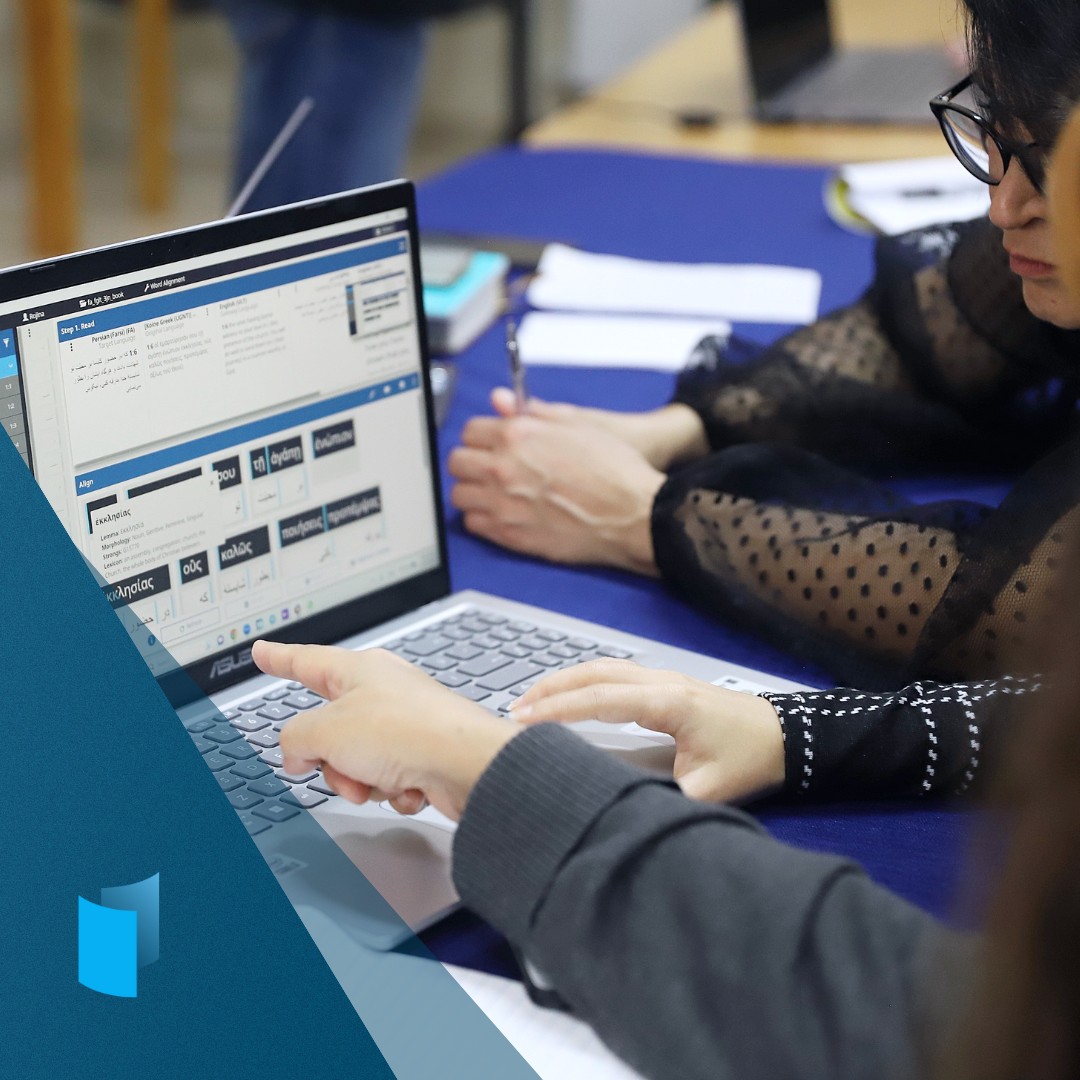
Software from unfoldingWord called “book packages” allows indigenous translators to check their own work, removing the need for Western consultants and keeping projects on track.
“We’re putting in their hands what a consultant would do for them. These tools not only allow them to translate the Bible, but maintain those translations forever,” Oakes says.
“The core of the book packages is a literal translation – this is what the Greek says, this is what the Hebrew says – and then a simplified translation to go alongside it,” he continues.
“With those two things, a translator has a lot of what he needs to translate the Bible into his language.”
Along with the two translations, book packages contain a set of verse-by-verse notes and dictionary definitions of difficult words.
“Maybe there’s some difficult grammar, or some idiomatic phrases, or some metaphors – the notes alert the translator to those things. Then, if the note just isn’t enough, there’s always a link from that note to an article about that issue,” Oakes says.

(Photo courtesy unfoldingWord)
Prayer and partnership
Oakes and his team develop the book packages in English first. Then unfoldingWord teams up with other major networks of believers to translate the resources into Gateway Languages such as Russian or Modern Standard Arabic.
unfoldingWord is developing software for each book in the Bible. “We have 13 more book packages to put together, including some of the really big, difficult books of the Old Testament like Isaiah, Jeremiah, and Ezekiel,” Oakes says.
“We will be tackling those this year and putting out at least phase one, but we do want to go back and further refine them as we get feedback from the field and have a little bit more time to go over them.”
Pray for Oakes and his team as they strive to complete the remaining book packages. Pray for clarity and that the completion process will be smooth, with no major obstacles. Consider partnering with unfoldingWord here to help them develop additional resources.
Header and story images courtesy of unfoldingWord.