Lebanon (MNN) — Lebanon draws global attention as Israel strikes southern Beirut suburbs, and Iran threatens to end negotiations with the United States.
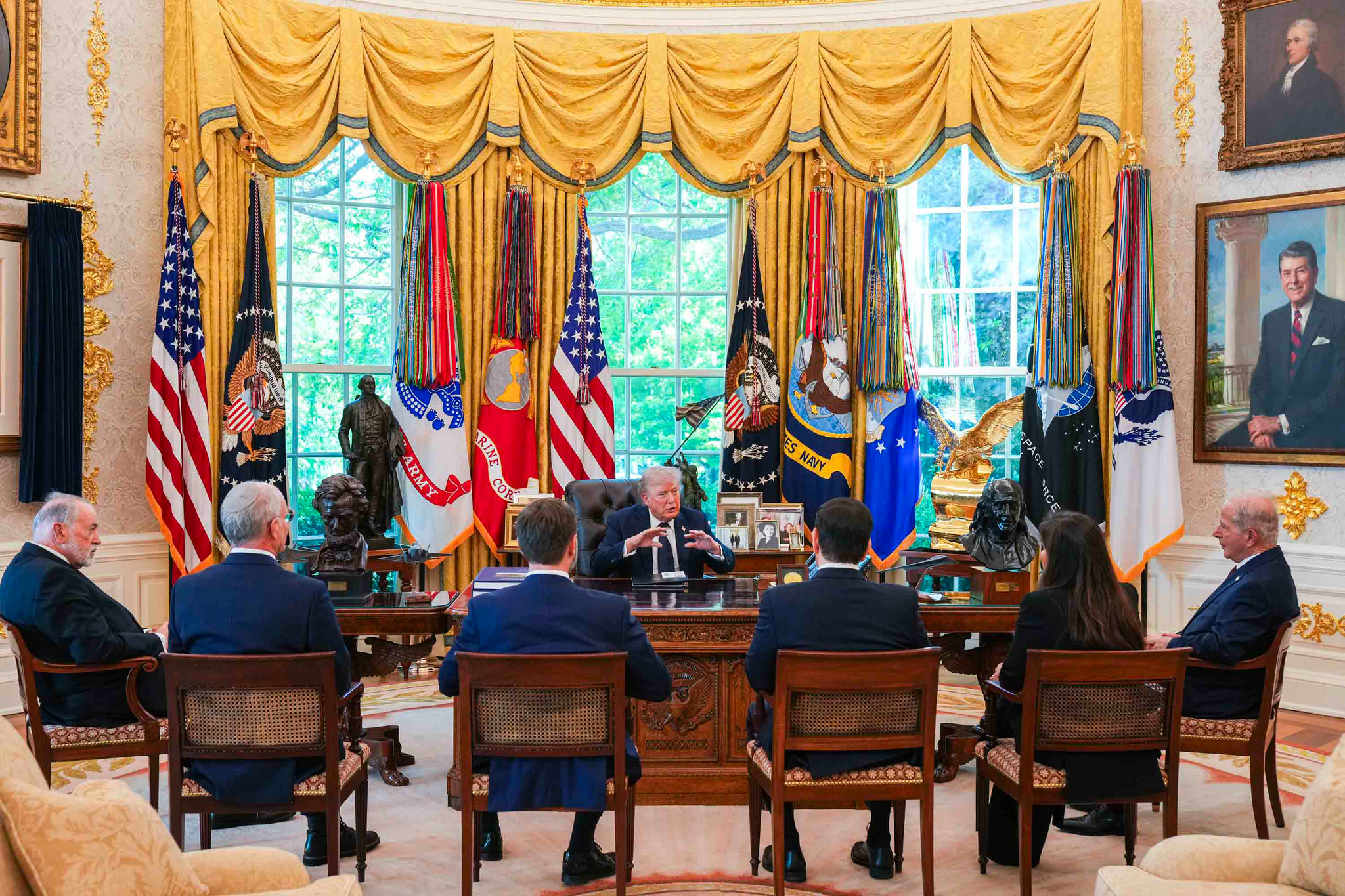
Secretary Marco Rubio attends working-level peace talks with Israel and Lebanon at the White House in Washington, D.C., April 23, 2026. (Official State Department photo by Freddie Everett)
Tensions reached a boiling point yesterday when Israel responded to Hezbollah attacks, carrying out its deepest incursion since the 2000 war. U.S. President Donald Trump described a de-escalation between the warring sides on Monday afternoon:
U.S. President Donald Trump said Monday that Israel and Hezbollah have agreed to dial back fighting after he held talks with Israeli Prime Minister Benjamin Netanyahu and communicated with the Lebanese militant group through mediators.
Trump announced the development in a social media post following a call with Netanyahu, whose forces recently made their deepest incursion into Lebanon in more than a quarter-century. Trump there would be no Israeli troops “going to Beirut, and any Troops that are on their way, have already been turned back.”
Cease-fire hopes falter
As with most Middle East conflicts, the latest escalation doesn’t occur in a vacuum.
“Last Thursday and Friday, a military delegation from the Lebanese army met at the Pentagon with an Israeli delegation, which is the first time in the history of those two nations that military representatives meet together,” Heart for Lebanon’s Camille Melki explains.
“We were hoping that the outcome of that meeting would come to a ceasefire and some sort of an agreement on the Israelis’ withdrawal from southern Lebanon and Hezbollah’s disarmament,” he continues.
“Unfortunately, things are going in the wrong direction. That’s not what we’ve been hoping for. That’s not what we’ve been praying for.”
On Sunday, Lebanese media reported progress toward a new cease-fire agreement in U.S.-mediated talks between Israel and Lebanon.
“The Lebanese government needs to figure out a way to contain Hezbollah and convince Hezbollah, for the better of the whole nation, that a cease-fire should be brokered and brokered soon,” Melki says.
“Iran, on the other hand, has pulled away from its negotiations with the U.S., which is not a good indicator at all, because that means even those negotiations seem to be stalled and might lead to further confrontation in the entire region.”

In a season where many feel forgotten, we believe that the Gospel is best shared through a ministry of presence.
(Photo, caption courtesy of Heart for Lebanon)
Christian villages face shortages
Monday was “A very, very violent day in southern Lebanon, in Beirut, in the Bekaa Valley, as well as in the northern villages of Israel,” Melki says.
“Hezbollah continues to shell Israel using drones and other military means, and Israel continues to retaliate against Hezbollah. We have seen a very high spike in casualties and damage all around.”
Most businesses are closed in southern Lebanon, and essential supplies are hard to find.
“There are a lot of small Christian villages right at the borders between Israel and Lebanon, and they’ve been under a significant economic and military siege. We sent 700 food parcels with the help of the Red Cross to those villages,” Melki says.
Each delivery offers encouragement to believers and a Gospel introduction to those who don’t know Christ. You can support a family in need here.
Pray for an end to the violence in Lebanon.
“Tuesday, June 2, and Wednesday, June 3, a State Department-brokered meeting will take place. Civilian delegates from the Lebanese government and the Israeli government will meet, and we hope that those meetings will turn out a little better,” Melki says.
Header and story images courtesy Heart for Lebanon.