International (MNN)—At a time when approximately one in ten people live in extreme poverty today, FARMS International is equipping families with the means for self-sufficiency. Some of their recent and upcoming work includes agricultural training in Honduras this month, an upcoming program in Southeast Asia, as well as early efforts to expand their presence in Sub-Saharan Africa.
“FARM’s basic and fundamental goal is to strengthen the global church, and we want to do that by focusing on our brothers and sisters in Christ who are in, you know, places of physical poverty,” explains Scott Clifton.
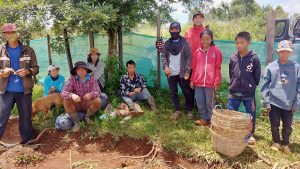
(Photo courtesy of FARMS International)
FARMS works through local churches to provide loans, technical support for income generating projects, and spiritual training for families. Loans are repaid to a revolving fund, and recipients agree to tithe to their local church. However, there are three criteria that need to be met in order for an organization to qualify for a loan:
- Global church—There must be a spiritual emphasis and biblical principles, acknowledging individuals’ roles as a stewards, not owners, and upholding the value of a local community that is seeking God together.
- Local ownership—The project must be sustainable and genuinely desired by the local leaders and participants. It is their program; FARMS is just helping them to create it.
- Livelihood development—The project must include humanitarian elements.
“We can see, if we remove any one of them, how that has the potential to negatively impact our ultimate goal,” says Clifton. “If we took out the church and we had a great organization focused on local ownership and really helping people develop their livelihoods, then that could be great in a lot of ways, but we have to wrestle with, you know, what does it profit a man to gain the world but lose his soul? So then you think about if there isn’t local ownership, we have to be really careful, because we might be contributing to harmful dependency, which is actually going to increase the need later on. And the third thing, if you take livelihood development out of the picture, we have to wrestle with the words of James, and he says faith without works is dead. What good does it do to pray for someone without taking any sort of action to help them, you know, overcome their physical barriers that they’re experiencing? So when those three things intersect, that’s really where FARMS sees ourself participating in the context of development and ministry around the world.”
This can mean saying no to organizations, like it did for an opportunity FARMS was pursuing in Honduras.
“We had an initial trip last November, and we went in with some ideas. When we highlight local ownership, the idea is that we’re not forcing a solution, but it’s actually desired by people who are there, and it fits within livelihood development as well,” describes Clifton. “So when we went there, we had an idea of ‘We’re going to start a loan program for a group of farmers.’ But then we gathered farmers around and we listened—we just asked some basic questions and got some answers, and realized that if we were to start a revolving loan program, they were not ready for it. We would have been setting them up for failure, because they wouldn’t have ever been able to repay those loans. Yet it would have been really hard to say no to, you know, a source of funds. And so we realized that it wasn’t the right time for that, but we could do an agricultural training where we could introduce them to some methods, like farming God’s way.”
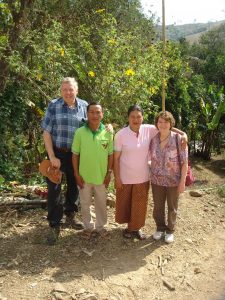
Joe & Pat Richter with one of the FARMS project holders in Thailand. (Photo, caption courtesy of FARMS International)
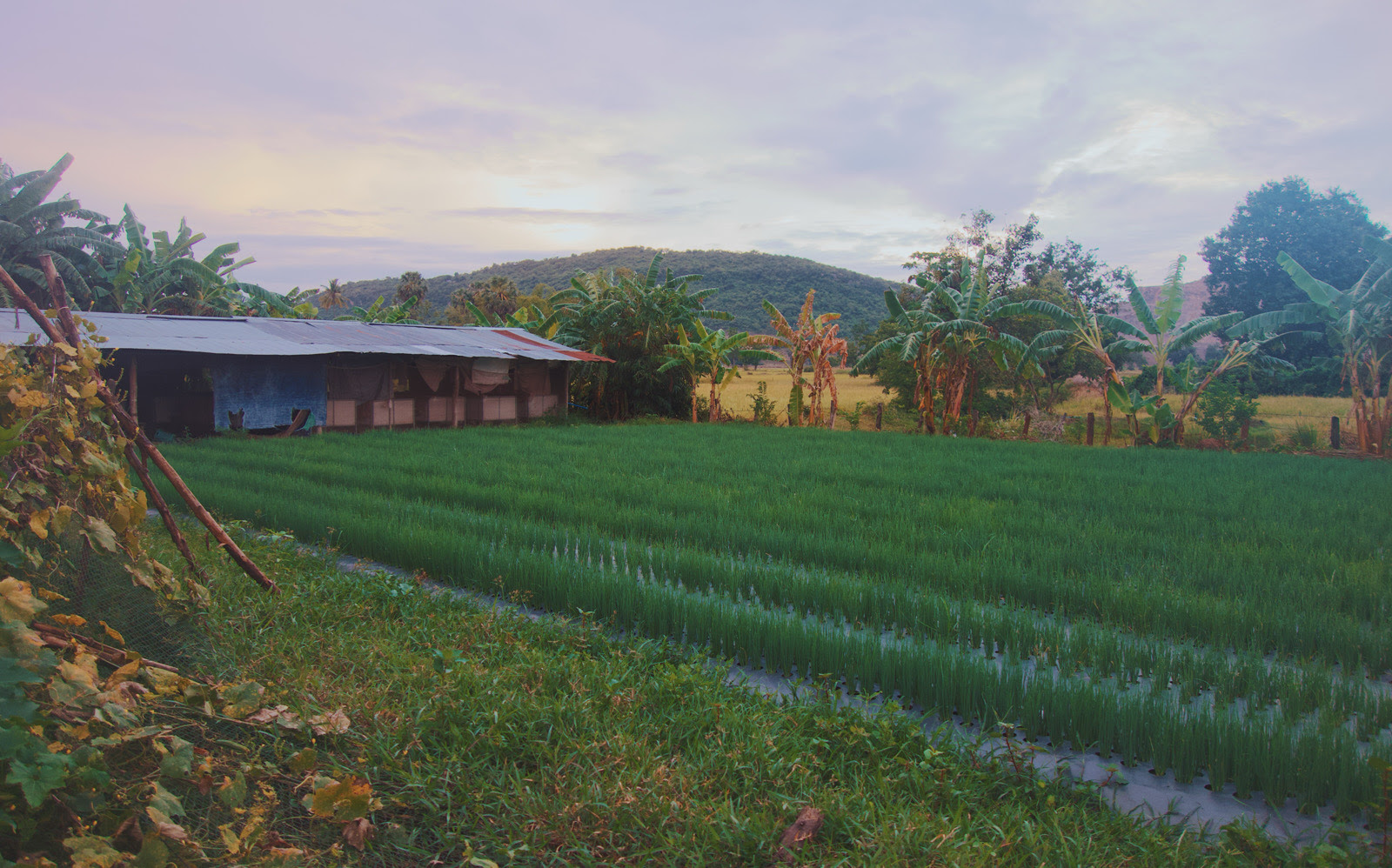
FARMS partnered with Equipping Farmers International to conduct the training this month. FARMS is also developing a new program in Southeast Asia, based around a program they’ve seen success with in Thailand.
“This program in Thailand has been going for about 30 years, and they’ve been asking the last year to start another one in this neighboring country, and so we have the opportunity to do that. We’re actually doing that as a matching fund, where we provide some of the funds, and that program in Thailand is also going to provide some of the funds.”
Meanwhile, they’ve hired a regional coordinator based out of Zambia, with experience in agricultural and small business training, to help FARMS expand their work in Sub-Saharan Africa. They also have relationships and programs in the Caribbean, throughout central-eastern Africa, in the Philippines, Thailand and Sri Lanka, among other countries.
You can support FARM’s mission by partnering with them financially. Go to farmsinternational.com to learn more.
Header photo courtesy of FARMS International.