Kenya (MNN) — Kenya’s rainy season arrived earlier than usual in this year, in late February/early March instead of late March, with devastating impact.
“People were not prepared — even our systems. It appeared that our systems are not ready to handle the kind of flash floods,” says Njoki Chege, the executive director of TWR Kenya and SIFA FM stations.
CARE International reported that more than 70,000 people were displaced by flooding in western and central Kenya. Floods killed at least 108 people and destroyed thousands of acres (over 1,200 hectares) of cropland.
Chege says the flooding has been described as apocalyptic, with images of destruction that people initially thought were AI-generated rather than reality.
“It has been a tough season for Kenya and Kenyans. But it has also been a season of introspection about asking questions around disaster preparedness and how we can prepare for such occurrences — because this is indeed a possibility to happen again next year,” she says.
More than 80 percent of Kenya’s land is classified as arid or semi-arid, making communities highly dependent on rainfall patterns. Floods and droughts are both familiar challenges across the country.
“We feel a sense of responsibility and the heaviness of the task to speak hope to people who otherwise would have given up hope because of the dire situation,” says Chege.
TWR Kenya shares programs on topics like flood safety and climate awareness, alongside Bible preaching and teaching content. For low-income rural communities, TWR Kenya comes alongside them with specialized development programs and occasionally radio set distributions.
“Our job has been to speak hope in the form of devotional programs — unpacking the Bible and unpacking biblical lessons around hoping God, about trusting God, and about leaving everything to God while also doing our part,” says Chege. “We have also been involved in minimal food distribution. That’s not what we do normally, but because of the situation and the places that we find ourselves, people actually lack basic food, basic needs.”
Many of TWR team members are themselves living in places the Kenyan government classifies as “hardship areas.” Chege asks for prayer for strength, encouragement, and provision for their gospel-centered work.
“We also want to pray that God continues to guide us in this noble task. It takes a special kind of grace [to speak hope], and so we are asking for the guidance of God,” she says.
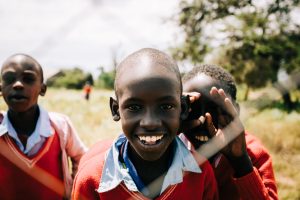
(Photo courtesy of Bennett Tobias via Unsplash)
The TWR Kenya team is grateful for the support of partners, which has brought the organization to its 50th anniversary this year. They are also celebrating the recent addition of new staff members, whom Chege describes as “mission-driven, willing and able to use the gifts God has given them for the advancement of His kingdom through the media.”
Despite the challenges Kenya is facing today, Chege wants others to know that Kenyans are not in a state of despair.
“People have lost their property, they’ve lost their loved ones, but we still remain very hopeful,” she says. “Yes, we went through some really tough times, but we are also a very resilient people, and we have bounced back. Now people are moving on. They’re recovering, and I’m really grateful to see that.”
Learn more about TWR Kenya’s work and how you can partner with their ministry by visiting their website.
This story has been updated from its broadcast with a more recent death toll from Kenya’s flooding: 108 people instead of 88 as originally reported.
Header photo of woman and child in Samburu, Kenya (Stock photo courtesy of Polina Koroleva via Unsplash).